
Why Does My AC Drain Line Keep Clogging?

Updated: Sep 20
Why Clearing an AC Drain Line Doesn't Prevent the Next Clog
You cleared your AC condensate drain line, watched the water begin flowing again and assumed the problem was solved. A few weeks or months later, the air conditioner shuts off, the drain pan fills with water, or the same drain line becomes clogged again.
This happens because clearing a blockage removes the material currently obstructing the pipe—it does not stop new material from accumulating as the air conditioner continues operating.
If you understand why AC drain lines repeatedly clog then we can help homeowners move from reacting to blockages toward ongoing condensate drain maintenance.
1. Understand Why AC Drain Lines Clog Repeatedly
An air conditioner continuously removes moisture from indoor air. As the moisture collects at the evaporator coil, it drops to the primary drain pan and flows through the condensate drain line. This water is driven gravity alone and exits either outside or in some parts of the country into a drain. As the water travels through the drain, it can carry dust, airborne particles and organic material into the pipe.
Making the problem worse is the newer AC systems. The more efficient the unit, the higher probability of ongoing clogs. The reason for this is th
at more efficient systems utilize less energy, which means they run longer to cool the space. I know this part makes no sense. Picture yourself driving down the road with a 4 speed vehicle. Your at 75 mph and the car is screaming, its not as efficient as it would be if it had 2 more gears to bring the rpm's down. Todays systems are running slower, which means they need to run longer to produce the same cooing results. This means, more condensate going through your AC drain line. Additionally the minerals condensating off the aluminum coils isn't helping the problem.
The inside of the condensate line remains wet during periods of regular air-conditioning operation. This creates an environment where biological material can accumulate along the interior walls of the pipe. New material continues entering the system even after a technician or homeowner clears the previous blockage.
Other conditions can also contribute to recurring drainage problems, including:
Improper drain-line pitch
Damaged or sagging piping
Poorly configured traps or vents
Debris entering through the outdoor drain opening
Restricted fittings
Condensate-pump problems
Drain lines shared by multiple systems
An air handler or drain pan that requires cleaning
A belly in the AC drain line - Allows stagnating water to sit for long periods creating a breeding ground for bacteria
An incorrectly pitched unit
An upward pitch in the AC drain line
A recurring blockage should not automatically be treated as a maintenance-only problem. An HVAC professional should inspect the system for damaged piping, improper drainage or installation defects that require correction.

The EPA recommends keeping HVAC drip pans clean, flowing properly and unobstructed as part of controlling building moisture. It also recommends regularly scheduled HVAC inspections and maintenance. Read the EPA’s moisture-control recommendations for HVAC systems.
2. What Is the Slime Inside an AC Condensate Drain?
The slippery, gelatinous, slimy snot material removed from an AC condensate drain is frequently described as slime, biofilm or zooglea. It can develop when microorganisms, moisture, dust and organic particles collect inside the drain system.
Because the material is sticky and slimy it can attach to the pipe and capture additional debris. As the accumulation becomes thicker, it can restrict water flow and eventually contribute to a complete blockage.
A restricted condensate drain may cause:
Water to collect in the primary drain pan
An overflow safety switch to shut down the air conditioner
Water to enter a secondary drain pan
Condensate to overflow near the air handler
An emergency or secondary pan to fill and leak
Damage to ceilings, drywall, insulation or flooring
The appearance of slime does not necessarily identify one particular organism. However, visible biological buildup indicates that material is accumulating in a consistently wet part of the system.
Learn more about what zooglea is and why it accumulates inside AC drain lines.
3. Why Isn’t One Shop-Vac Cleaning Enough?
Connecting a wet/dry vacuum to the outdoor condensate drain outlet can help remove an existing accumulation. It is a useful corrective step when performed safely and connected to the proper drain outlet.
However, a shop-vac cleaning only removes material present during that particular cleaning. Once the air conditioner resumes producing condensation, moisture and debris begin passing through the drain again.
This explains why a line may drain properly immediately after cleaning but become restricted later. The cleaning was effective for that moment in time, but it did not provide continued maintenance between service visits. At minimum, the drain line should be maintained monthly during the cooling season and before starting the unit up in the spring (critters and debris enter the line)
Homeowners looking for a longer-term approach should distinguish between:
Clearing: Removing a blockage that already exists
Maintaining: Repeatedly removing accumulating material before it develops into another blockage (this is what the AC NeverClog was designed to do automatically)
Repairing: Correcting damaged, improperly installed or poorly draining piping
Read this complete guide to preventing recurring AC drain line clogs.
4. How Can I Maintain My AC Drain Without Bleach or Vinegar?
Some homeowners use bleach, vinegar, tablets or other chemical treatments in condensate drain lines. The appropriate method depends on the HVAC equipment, drain materials and manufacturer’s instructions.
Before adding any substance, review the HVAC manufacturer’s maintenance requirements and the product label and Safety Data Sheet. Never mix cleaning products, and do not assume that every chemical is compatible with every HVAC system (many manufacturers refrain from recommending chemicals and it could possibly void a warranty on an expensive coil)
A chemical-free maintenance approach physically removes accumulating material instead of relying on recurring liquid treatments. This can eliminate the need to remember repeated applications or purchase chemical refills.
Regardless of the method selected, condensate maintenance should not be used to conceal an underlying drainage defect. Persistent backups, standing water or unexplained leaks require inspection by a qualified HVAC professional.
5. How Can Automatic Suction Help Prevent Another AC Drain Clog?
AC NeverClog™ is designed to provide scheduled condensate drain maintenance after an existing blockage and drainage defects have been addressed.

The exterior-mounted system connects to a compatible condensate drain through a negative-pressure manifold. Its factory-programmed schedule operates an evacuation cycle for one minute every 24 hours, drawing accumulating biological material and debris toward the outdoor drain outlet.
This scheduled process addresses the reason many condensate drains clog again: new material continues accumulating between occasional cleanings.
AC NeverClog provides:
Automatic daily drain-line evacuation
Chemical-free condensate drain maintenance
Exterior installation on compatible systems
No recurring bleach, vinegar, tablets or chemical refills
Optional scheduling and manual control through a 2.4 GHz Wi-Fi connection
Minimal routine upkeep, with an annual tank and valve rinse recommended
AC NeverClog does not replace proper drain-line installation, required drain pans, float switches, secondary drainage or professional HVAC inspections. Existing blockages should be cleared, and damaged or improperly configured drainage should be corrected before installation.
Move From Repeated Clearing to Scheduled Prevention
If your AC drain line keeps clogging, repeatedly clearing it addresses the immediate obstruction but may not solve the recurring maintenance problem.
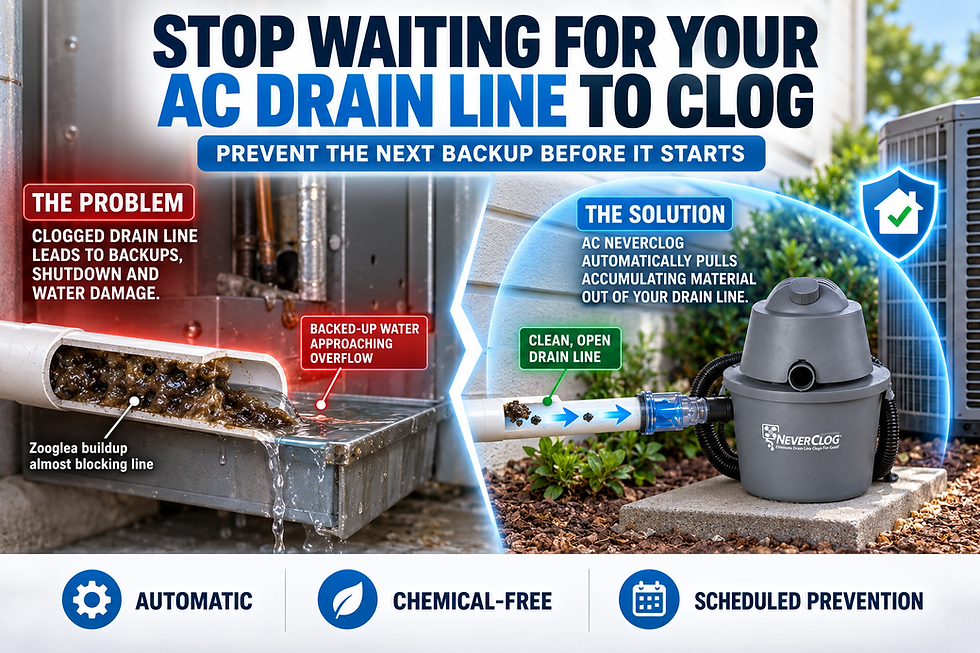
Start by having the drain system inspected and correcting existing blockages, damaged piping, improper pitch or other drainage defects. Once the system is operating correctly, scheduled maintenance can help remove accumulating material before it develops into another obstruction.
AC NeverClog™ provides automatic, chemical-free condensate drain maintenance for compatible residential and light-commercial HVAC systems.


Comments