
The Complete Guide to AC Drain Line Clogs: Causes, Cleaning & Prevention

Why AC Drain Lines Clog and How to Prevent It
Your AC condensate drain line has one simple job: carry moisture collected by the air conditioner safely away from the system. The problem is that the inside of the drain line can stay damp, creating an environment where dust, organic material and biological growth can collect and eventually restrict water flow.
When an AC drain line becomes clogged, condensate can back up into the drain pan. A properly installed float switch may shut the system down before the water overflows, but if the backup isn't caught in time, it can lead to water around the air handler, ceiling damage or other moisture-related problems.
If your AC drain line is already clogged, exterior wet/dry vacuum suction is one common way to remove the blockage. But clearing an existing clog and preventing the next one are two different things. In this guide, we'll cover why condensate drains clog, warning signs to watch for, how to clear and maintain the line, and ways to reduce recurring buildup.

60—Day Money-Back Guarantee
No Chemicals. No recurring drain line treatments. No attic trips.
2—Year Warranty
How to Clean and Maintain an AC Condensate Drain Line
If your AC condensate drain is flowing slowly or has already developed a blockage, the goal is to remove the buildup and restore normal drainage. A wet/dry vacuum applied from the exterior drain termination is one common method for pulling standing water and loose debris from the line.
Before working around an air handler or condensate system, turn off power to the HVAC equipment and follow the manufacturer's service instructions. If you're unsure how your system is configured, contact a qualified HVAC technician.
Inspect the Pan:
-
Check for standing water. If the pan is full, use a handheld pump or wet/dry vac to empty it.
Step-by-Step Cleaning Method:
-
Power Down the System: Turn off your AC unit at the thermostat and the main breaker panel for safety.
Locate the T-Pipe Access Port/Clean out Port:
-
Start by finding the PVC condensate drain line near your indoor air handler. Most systems have a vertical cleanout that gives you access to the drain line. You'll usually find it in the attic, closet, garage, or wherever your air handler is located.
-
Remove the cap to access the line. If your system doesn't have a cleanout, one may need to be added before performing this type of maintenance.
Flush with Warm Water:
-
Slowly pour about 16–32 ounces of warm—not boiling—water into the cleanout. This can help loosen debris and also gives you a quick way to see whether the line is draining properly.
-
Warm is good. Boiling is not better.
Seal the Cleanout Before Using Suction:
-
Before applying suction from outside, put the cleanout cap back on. You want the drain line sealed so the vacuum can create negative pressure through the line instead of simply pulling air through the open cleanout.
-
Better seal = better suction.
Vacuum the Drain Line From Outside:
-
Find the condensate drain-line outlet outside your home and connect a wet/dry vacuum. Create as tight a seal as possible around the connection, then let the vacuum pull out standing water and loose buildup.
-
And don't be surprised by what comes out. AC drain lines can grow some pretty impressive science experiments.
Re-prime the P-Trap
-
After evacuating your AC Drain Line also known as your Condensate Drain Line make sure to re-prime your P-Trap
-
Your P-Trap can be primed one of 2 ways.
-
First: You can put water down the same clean out T that you previously placed water into.
-
Second: You can place your hand over the end of the outside drain line until water starts to hit your hand.
-
Re-priming the P-Trap is crucial in order to make sure your system doesn't shut down from an improperly cleaned line.
-
If you here any gurgling at all in your line after you've completed the 1st or 2nd step then there is not enough water in your P-Trap to function correctly.
Turn Your System Back On:
-
Once the drain line is clear, the cleanout is capped, and the P-trap has been re-primed if needed, restore power to your HVAC system.
Then check the system and drain line to make sure everything is operating and draining normally.
-
Simple.
Checking your Drain Line Slope:
-
Take a look at the PVC drain line and make sure it maintains a consistent downward slope. Over time, heat and poorly supported PVC can sag and create low spots, or “bellies” where water sits instead of draining.
-
Standing water gives biological buildup exactly what it likes: moisture and time. Neither is particularly helpful when you're trying to keep a drain line clear.
Check your Overflow Pan and Float Switch:
-
Your float switch is one of the last lines of defense against condensate overflow. If the water level gets too high, a properly installed float switch can shut the HVAC system down before that water ends up somewhere you'd really rather it didn't.
-
Test the switch periodically according to the manufacturer's instructions. If activating it doesn't shut the system down, have an HVAC professional inspect it.
-
A float switch is cheap. A ceiling isn't.
Change or Clean your AC Air Filter
-
Check your air filter regularly and replace or clean it according to the manufacturer's recommendations. Besides helping your HVAC system breathe easier, a clean filter reduces the amount of dust and debris making its way into the system.
-
Less dirt entering the system means less material available to eventually find its way into the condensate pan and drain.
Frequency:
-
There's no perfect maintenance schedule for every home. Climate, humidity, system runtime, filter type, pets, and even where you live can affect how quickly buildup develops.
-
If you're in a hot, humid climate where the AC runs constantly, it's smart to check the condensate system more frequently (monthly) during cooling season. Look for slow drainage, standing water, slime, or other signs that buildup is developing.
Have your inside and outside coils cleaned:
-
Dirty coils don't just hurt efficiency, they can contribute to a dirtier condensate system.
-
Have the indoor evaporator coil, drain pan, and outdoor condenser coil inspected regularly and cleaned when needed. Keeping the entire HVAC system clean helps reduce the dust and debris that can eventually make its way into the condensate drain.
-
Follow your HVAC manufacturer's recommendations or have your HVAC technician include these areas during routine maintenance.
Emergency Troubleshooting: Why Your AC Turned Off

How Can a Clogged AC Drain Line Shut Down Your AC?
Condensate collects:
-
Every time your AC cools your home, it's also removing humidity from the air. That moisture condenses on the cold evaporator coil and drips into the drain pan below.
-
From there, the water flows through the condensate drain line and out of the home.
-
At least, that's what it's supposed to do.
Blockage Formation:
-
The inside of an AC drain line is warm, wet, and not exactly the cleanest place in your home. Add dust, organic material, and microorganisms, and you have ideal conditions for biological buildup.
-
Over time, that buildup can develop into a thick, gelatinous biofilm commonly associated with zooglea. As more material accumulates, the opening inside the pipe gets smaller and water has a harder time getting through.
-
Eventually, something has to give.
Pan Overflow and Float Switch Activation:
-
When water backs up into the drain pan, a safety device called a float switch rises with the water level. Once this float hits a certain level, it either works, floats from being mounted incorrectly, or fails.
System Shutdown:
-
Once this float switch is triggered, the switch is designed to cut power to your thermostat or outdoor compressor. When triggered, the float switch shuts the system down, helping prevent the pan from continuing to fill and potentially overflow.
Diagnosing Common AC Drain Symptoms
Use this quick guide to identify what is happening with your system and what immediate action you should take:
Symptom: The AC thermostat is on, but the unit isn't running
-
Root Cause: The safety float switch was triggered by standing water in the drain pan.
-
Older thermostats often do not turn off when the safety float is triggered.
-
Action Needed: Turn off power at the breaker, inspect the primary drain pan, and clear the drain line blockage.
Symptom: The AC thermostat is Off
-
Root Cause: The safety float switch was triggered by standing water in the drain pan.
-
Newer thermostats will often shut off when the safety float has been triggered often indicating an ac drain line clog. This isn't always the case, but there's a good probability that this is what has happened.
-
Action Needed: Turn off power at the breaker, inspect the primary drain pan, and clear the drain line blockage.
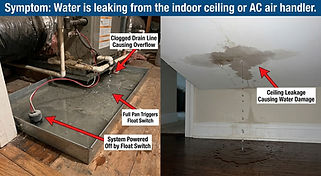
Symptom: Water is leaking from the indoor ceiling or air handler
-
Root Cause: The drain pan is overflowing, or the condensate line is completely blocked without a working float switch.
-
Action Needed: Turn off the AC immediately to stop water production and clear the standing water with a wet/dry vac.
Symptom: Musty, damp odors coming from the air vents
-
Root Cause: Stagnant water and microbial slime buildup inside the drain line or pan.
-
Action Needed: Flush the drain line and thoroughly clean the drain pan.


Why Traditional DIY Fixes Fail (Bleach, Vinegar, & Tablets)
For decades, homeowners and technicians relied on pouring household chemicals down the drain line. However, these traditional methods often cause more harm than good and fail to provide long-term protection.
The Problem with Bleach
-
Corrodes Equipment: Chlorine bleach reacts with metal drain pans, copper coils, and soft plastic components, leading to premature equipment failure.Harmful Fumes: Bleach fumes can pull back into your indoor air supply through the evaporator coil casing, circulating harsh chemicals throughout your home.Destroys PVC Glue: Frequent bleach application breaks down the chemical bonds in PVC cement over time, causing hidden leaks inside walls or attics
The Problem with Vinegar
-
Damage to Copper Coils: Vinegar is acidic (acetic acid). When poured near the evaporator coil, vinegar fumes can pit and corrode copper tubing, leading to expensive refrigerant leaks.Incomplete Cleaning: Vinegar softens top-level slime, but it doesn't clear stubborn, compacted blockages deeper in the pipe.
The Problem with Drain Pan Tablets
-
Gel Residue: Pan tablets slow-dissolve, but as they wear down, they often turn into a gummy residue that actually contributes to drain line blockages downstream.
What Causes Zooglea and Recurring Slime?
-
If your AC drain line keeps clogging every few weeks or a few times over the cooling season you are likely dealing with Zooglea—a bacterial slime colony.
-
Zooglea bacteria feed on the organic dust and high humidity inside your HVAC system. They produce a thick, gelatinous matrix that clings to the inside walls of PVC pipes.
-
Because liquid flushes wash down the drain in seconds, microscopic bacterial spores remain behind. Within days, these spores multiply and recreate the jelly-like blockage, causing continuous float switch trips during peak summer months.
Permanent Prevention: Automated, Chemical-Free Drain Maintenance
Instead of repeatedly reacting to overflows, climbing into attics, or calling HVAC technicians for emergency service calls, the modern approach relies on automated, negative-pressure maintenance.
The AC NeverClog Advantage
-
The AC NeverClog system replaces temporary chemical flushes with automatic, maintenance-free operation:
Automated Suction Cycles:
-
Uses low-voltage negative pressure to pull standing moisture and developing microbial growth out of the line before it hardens into a clog. 100% Chemical-Free Protection: Keeps your air, coils, and drain pans completely safe from corrosive fumes or acids.Continuous Peace of Mind: Protects against unexpected system shutdowns, costly emergency service fees, and water damage repair costs.
Frequently Asked Questions
-
Why does my AC drain line keep clogging every few weeks?Continuous humidity and dark pipe conditions create an ideal environment for algae and Zooglea bacteria. Standard liquid flushes clear the immediate opening but leave bacterial spores behind, allowing slime to grow back rapidly.
Can an overflowing AC condensate pan cause severe water damage?
-
Yes. An overflowing pan can dump gallons of water directly into your ceiling, floorboards, and walls, resulting in structural drywall failure and hazardous mold growth inside your home.
How often should an AC drain line be cleaned?
-
Standard manual lines should be inspected and cleaned every 3 months. Automated maintenance systems run continuously to keep lines clear without manual intervention.
